 Image 1 of 1
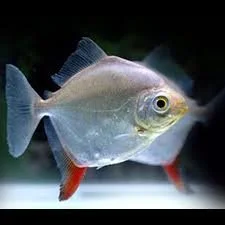
The red hook myleus (*Myloplus rubripinnis), also known as the red hook silver dollar, is a medium to large, silver-colored, omnivorous freshwater fish from South America with a distinctive, "hooked" red anal fin. It is a schooling, peaceful, and active fish that can grow up to 15 inches long and is often kept as an aquarium species.
Physical characteristics
Color: Silvery.
Anal fin: A long, "hooked" anal fin that is red in color and edged in black, which distinguishes it from other silver dollar species.
Size: Can grow to about 15 inches (39 cm) in length.
Behavior and habitat
Social: They are social and do best in groups of five or more individuals.
Behavior: They are active and occupy the middle and top regions of the water column, making them a good dither fish for shyer species. They can be nervous and may jump when startled, so a secure lid is essential for their aquarium.
Habitat: In the wild, they are found in the Amazon and Orinoco River basins and rivers of the Guiana Shield.
Diet
Omnivorous: In the wild, they are primarily herbivores that eat plant matter, but they will also eat other foods.
Aquarium diet: In an aquarium, they should be fed a diet rich in vegetable matter, such as cucumber, peas, and spirulina, supplemented with commercial foods and frozen treats like bloodworms or brine shrimp.
Plant nibbling: They may nibble on live aquarium plants, so it is often best to use artificial plants or very hardy, fast-growing species like Java fern or Anubias.
Other facts
Scientific classification: They belong to the family Serrasalmidae, which also includes piranhas.
Bite: They have powerful jaws capable of delivering a serious bite to humans.
Lifespan: With proper care, they can live for 10 to 12 years.
The red hook myleus (*Myloplus rubripinnis), also known as the red hook silver dollar, is a medium to large, silver-colored, omnivorous freshwater fish from South America with a distinctive, "hooked" red anal fin. It is a schooling, peaceful, and active fish that can grow up to 15 inches long and is often kept as an aquarium species.
Physical characteristics
Color: Silvery.
Anal fin: A long, "hooked" anal fin that is red in color and edged in black, which distinguishes it from other silver dollar species.
Size: Can grow to about 15 inches (39 cm) in length.
Behavior and habitat
Social: They are social and do best in groups of five or more individuals.
Behavior: They are active and occupy the middle and top regions of the water column, making them a good dither fish for shyer species. They can be nervous and may jump when startled, so a secure lid is essential for their aquarium.
Habitat: In the wild, they are found in the Amazon and Orinoco River basins and rivers of the Guiana Shield.
Diet
Omnivorous: In the wild, they are primarily herbivores that eat plant matter, but they will also eat other foods.
Aquarium diet: In an aquarium, they should be fed a diet rich in vegetable matter, such as cucumber, peas, and spirulina, supplemented with commercial foods and frozen treats like bloodworms or brine shrimp.
Plant nibbling: They may nibble on live aquarium plants, so it is often best to use artificial plants or very hardy, fast-growing species like Java fern or Anubias.
Other facts
Scientific classification: They belong to the family Serrasalmidae, which also includes piranhas.
Bite: They have powerful jaws capable of delivering a serious bite to humans.
Lifespan: With proper care, they can live for 10 to 12 years.