
 Image 1 of 1
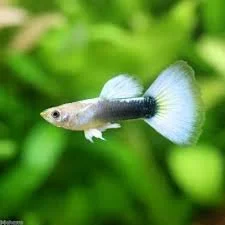
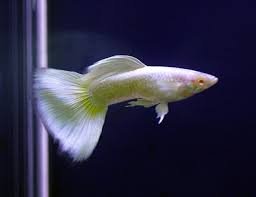
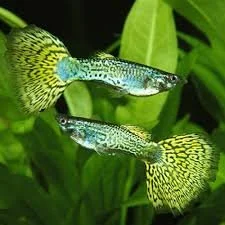
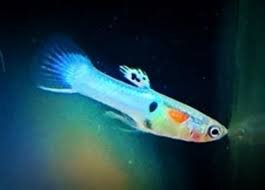
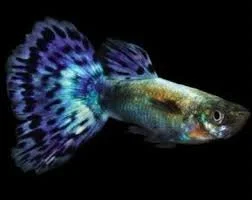
The "blue elephant ear" guppy is a variant of the Poecilia reticulata (guppy) known for its vibrant blue body and exceptionally large pectoral fins, which give it the "elephant ear" or "dumbo" name. These peaceful, livebearing fish are highly sought after for their stunning appearance, easy care, and suitability for community tanks, although they may breed prolifically if males and females are kept together.
Appearance and traits
Color: Shimmering electric blue body, often with metallic highlights.
Fins: Distinctive, oversized pectoral fins that resemble elephant ears.
Size: Males typically grow to about 1.5–2 inches (3.8–5 cm).
Sexual Dimorphism: Males are smaller, more colorful, and have a modified anal fin (gonopodium), while females are larger, less colorful, and have a gravid spot near the anal fin.
Care and environment
Temperament: Peaceful and social, making them good for community tanks.
Tank size: A minimum of 10 gallons is recommended for a small group.
Water conditions:
Temperature: 74–82°F (23–28°C)
pH: 6.8–7.8
Hardness: 8–12 dGH
Aquascaping: Provide live or artificial plants for cover and a calm water flow to protect their delicate fins.
Diet
Omnivorous and will eat a varied diet of high-quality flakes or micro pellets, along with frozen/live foods like brine shrimp, daphnia, and bloodworms.
Other considerations
Breeding: These are livebearers, so they will produce fry.
Tank mates: Generally compatible with other peaceful community fish like platies, mollies, tetras, and corydoras. Avoid fin-nippers like some barbs.
Territorial behavior: Multiple males can become territorial, so it's best to keep only one or a few in a tank.
Care level: Easy, making them a great choice for beginners.
The "blue elephant ear" guppy is a variant of the Poecilia reticulata (guppy) known for its vibrant blue body and exceptionally large pectoral fins, which give it the "elephant ear" or "dumbo" name. These peaceful, livebearing fish are highly sought after for their stunning appearance, easy care, and suitability for community tanks, although they may breed prolifically if males and females are kept together.
Appearance and traits
Color: Shimmering electric blue body, often with metallic highlights.
Fins: Distinctive, oversized pectoral fins that resemble elephant ears.
Size: Males typically grow to about 1.5–2 inches (3.8–5 cm).
Sexual Dimorphism: Males are smaller, more colorful, and have a modified anal fin (gonopodium), while females are larger, less colorful, and have a gravid spot near the anal fin.
Care and environment
Temperament: Peaceful and social, making them good for community tanks.
Tank size: A minimum of 10 gallons is recommended for a small group.
Water conditions:
Temperature: 74–82°F (23–28°C)
pH: 6.8–7.8
Hardness: 8–12 dGH
Aquascaping: Provide live or artificial plants for cover and a calm water flow to protect their delicate fins.
Diet
Omnivorous and will eat a varied diet of high-quality flakes or micro pellets, along with frozen/live foods like brine shrimp, daphnia, and bloodworms.
Other considerations
Breeding: These are livebearers, so they will produce fry.
Tank mates: Generally compatible with other peaceful community fish like platies, mollies, tetras, and corydoras. Avoid fin-nippers like some barbs.
Territorial behavior: Multiple males can become territorial, so it's best to keep only one or a few in a tank.
Care level: Easy, making them a great choice for beginners.