 Image 1 of 1
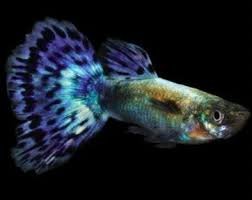
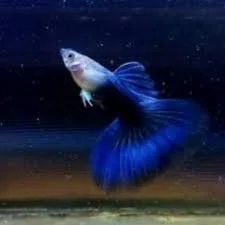
The Blue Diamond guppy is a vibrant, selectively bred ornamental fish known for its striking, iridescent deep blue color. Males are more colorful with elaborate fins and typically grow to about
4−54 minus 5
4−5
cm, while females are larger (
5−65 minus 6
5−6
cm), more muted in color, and have a more robust body. This peaceful, social, and hardy species is a popular choice for community aquariums due to its ease of care.
Appearance
Color: A deep, often shimmering or metallic, solid blue.
Male vs. Female: Males are smaller, more colorful, and have a pointed anal fin and larger, more ornate tails. Females are larger, have a more rounded body, and less vibrant colors.
Fins: Some varieties have "ribbon-like" fins, creating an elegant display.
Aquarium care
Temperament: Peaceful and social, making them suitable for community tanks with other non-aggressive fish.
Tank size: A minimum of 10 gallons is recommended.
Water conditions: Prefer warm water (75−82∘𝐹 or 24−28∘𝐶) and can tolerate a pH range of 6.5−8.0 in soft to moderately hard water.
Aquascaping: Provide both open swimming space and plenty of plants for hiding spots.
Diet
Type: Omnivores that enjoy a varied diet.
Food: A good mix of high-quality flake food, supplemented with live or frozen foods like brine shrimp, bloodworms, and daphnia is ideal.
Breeding
Reproduction: Livebearers, meaning they give birth to free-swimming young.
Management: A single mating can fertilize multiple batches of eggs, and females can give birth to up to 30 fry at a time. It is recommended to separate pregnant females and provide plenty of hiding spots for the fry to protect them from adults.
The Blue Diamond guppy is a vibrant, selectively bred ornamental fish known for its striking, iridescent deep blue color. Males are more colorful with elaborate fins and typically grow to about
4−54 minus 5
4−5
cm, while females are larger (
5−65 minus 6
5−6
cm), more muted in color, and have a more robust body. This peaceful, social, and hardy species is a popular choice for community aquariums due to its ease of care.
Appearance
Color: A deep, often shimmering or metallic, solid blue.
Male vs. Female: Males are smaller, more colorful, and have a pointed anal fin and larger, more ornate tails. Females are larger, have a more rounded body, and less vibrant colors.
Fins: Some varieties have "ribbon-like" fins, creating an elegant display.
Aquarium care
Temperament: Peaceful and social, making them suitable for community tanks with other non-aggressive fish.
Tank size: A minimum of 10 gallons is recommended.
Water conditions: Prefer warm water (75−82∘𝐹 or 24−28∘𝐶) and can tolerate a pH range of 6.5−8.0 in soft to moderately hard water.
Aquascaping: Provide both open swimming space and plenty of plants for hiding spots.
Diet
Type: Omnivores that enjoy a varied diet.
Food: A good mix of high-quality flake food, supplemented with live or frozen foods like brine shrimp, bloodworms, and daphnia is ideal.
Breeding
Reproduction: Livebearers, meaning they give birth to free-swimming young.
Management: A single mating can fertilize multiple batches of eggs, and females can give birth to up to 30 fry at a time. It is recommended to separate pregnant females and provide plenty of hiding spots for the fry to protect them from adults.