
 Image 1 of 1
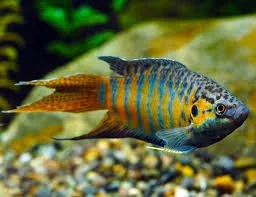
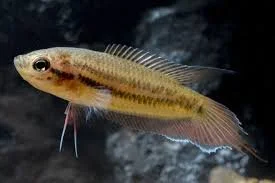
The spiketail paradisefish (Pseudosphromenus cupanus) is a medium-small, elongated fish with a brown body, dark red/brown fins pointed and edged with iridescent pale blue, and small, pointed, red ventral fins also tipped with blue. Males are known to build bubble nests and are protective of their eggs. These fish are found in southern India and Sri Lanka and are well-suited for heavily planted tanks.
Appearance
Body: Elongated and typically brown, with bars that become more pronounced when stressed.
Fins: Dorsal, anal, and caudal fins are pointed and dark red/brown with an iridescent pale blue edge.
Ventral fins: Small, pointed, and red with iridescent blue tips.
Behavior and habitat
Behavior: Males build bubble nests and may become territorial during breeding season. They are often found in slow-moving or stagnant waters like ditches and paddy fields.
Diet: In the wild, they eat insects and zooplankton. In captivity, they will eat various ornamental fish foods, including pellets and frozen foods.
Habitat: They prefer heavily planted aquariums, as they build bubble nests under large plant leaves or other shelters.
Care
Tank mates: They can be kept with other peaceful community fish like tetras, barbs, and danios.
Aquarium size: While specific recommendations vary, they are described as small to medium-small gouramis, and a tank with plants is ideal.
Water conditions: They can adapt to a range of water parameters, but steady conditions are more important than matching a specific water profile.
The spiketail paradisefish (Pseudosphromenus cupanus) is a medium-small, elongated fish with a brown body, dark red/brown fins pointed and edged with iridescent pale blue, and small, pointed, red ventral fins also tipped with blue. Males are known to build bubble nests and are protective of their eggs. These fish are found in southern India and Sri Lanka and are well-suited for heavily planted tanks.
Appearance
Body: Elongated and typically brown, with bars that become more pronounced when stressed.
Fins: Dorsal, anal, and caudal fins are pointed and dark red/brown with an iridescent pale blue edge.
Ventral fins: Small, pointed, and red with iridescent blue tips.
Behavior and habitat
Behavior: Males build bubble nests and may become territorial during breeding season. They are often found in slow-moving or stagnant waters like ditches and paddy fields.
Diet: In the wild, they eat insects and zooplankton. In captivity, they will eat various ornamental fish foods, including pellets and frozen foods.
Habitat: They prefer heavily planted aquariums, as they build bubble nests under large plant leaves or other shelters.
Care
Tank mates: They can be kept with other peaceful community fish like tetras, barbs, and danios.
Aquarium size: While specific recommendations vary, they are described as small to medium-small gouramis, and a tank with plants is ideal.
Water conditions: They can adapt to a range of water parameters, but steady conditions are more important than matching a specific water profile.