 Image 1 of 1
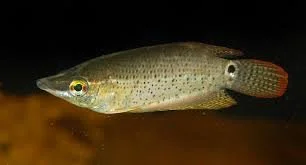
The "Indian nobilis fish" is likely the Noble Gourami (Ctenops nobilis), a unique and somewhat aggressive freshwater fish native to the Ganges and Brahmaputra river systems in India, Bangladesh, and Nepal. It is distinct from typical gouramis with an angular, almost triangular body shape, and can grow to about 10 cm (4 inches). This species is known for being difficult to keep, preferring slow-moving, heavily vegetated waters and requiring an advanced hobbyist for successful aquarium maintenance.
Description and physical characteristics
Appearance: Its body shape is angular, with a finnage that is almost triangular, making it look very different from common gouramis. It is also known as the Frail Gourami.
Size: Adults typically reach a maximum size of 8–10 cm (3–4 inches).
Coloration: The male gains a cryptic, strange marble patterning during the parental brooding phase.
Habitat and distribution
Origin: Native to the Ganges and Brahmaputra river drainages in northeastern India, Bangladesh, and Nepal.
Natural habitat: Found in slow-moving, clear streams with ample vegetation, such as overhanging plants or driftwood.
Temperament and compatibility
Temperament: It is considered somewhat aggressive and territorial, especially as adults.
Compatibility: It is not recommended for the average community aquarium. While it can be kept in groups if the tank is large enough with plenty of cover, it is often recommended to keep them as a loner or in groups of at least six to mitigate aggression, say Aquadiction and Instagram.
Aquarium care
Difficulty: Considered difficult to keep due to its specific needs.
Tank requirements: A large tank with dense plants, driftwood, and a lid (they are prone to jumping) is recommended for a group.
Diet: It is a carnivorous fish and a micropredator that prefers live foods like bloodworms and mosquito larvae. Prepared foods can be introduced with patience.
Breeding: It is a mouthbrooder, where the male holds the eggs in his mouth until they hatch.
The "Indian nobilis fish" is likely the Noble Gourami (Ctenops nobilis), a unique and somewhat aggressive freshwater fish native to the Ganges and Brahmaputra river systems in India, Bangladesh, and Nepal. It is distinct from typical gouramis with an angular, almost triangular body shape, and can grow to about 10 cm (4 inches). This species is known for being difficult to keep, preferring slow-moving, heavily vegetated waters and requiring an advanced hobbyist for successful aquarium maintenance.
Description and physical characteristics
Appearance: Its body shape is angular, with a finnage that is almost triangular, making it look very different from common gouramis. It is also known as the Frail Gourami.
Size: Adults typically reach a maximum size of 8–10 cm (3–4 inches).
Coloration: The male gains a cryptic, strange marble patterning during the parental brooding phase.
Habitat and distribution
Origin: Native to the Ganges and Brahmaputra river drainages in northeastern India, Bangladesh, and Nepal.
Natural habitat: Found in slow-moving, clear streams with ample vegetation, such as overhanging plants or driftwood.
Temperament and compatibility
Temperament: It is considered somewhat aggressive and territorial, especially as adults.
Compatibility: It is not recommended for the average community aquarium. While it can be kept in groups if the tank is large enough with plenty of cover, it is often recommended to keep them as a loner or in groups of at least six to mitigate aggression, say Aquadiction and Instagram.
Aquarium care
Difficulty: Considered difficult to keep due to its specific needs.
Tank requirements: A large tank with dense plants, driftwood, and a lid (they are prone to jumping) is recommended for a group.
Diet: It is a carnivorous fish and a micropredator that prefers live foods like bloodworms and mosquito larvae. Prepared foods can be introduced with patience.
Breeding: It is a mouthbrooder, where the male holds the eggs in his mouth until they hatch.